
My home town of Wellington blows a bit. Wikipedia states that it is the world’s windiest city by average wind speed, our rugby team is called the Hurricanes and turbulent airport landings are the stuff of legend. Wind is also the enemy of the flyfisher, but if I waited for a calm day I would seldom fish…
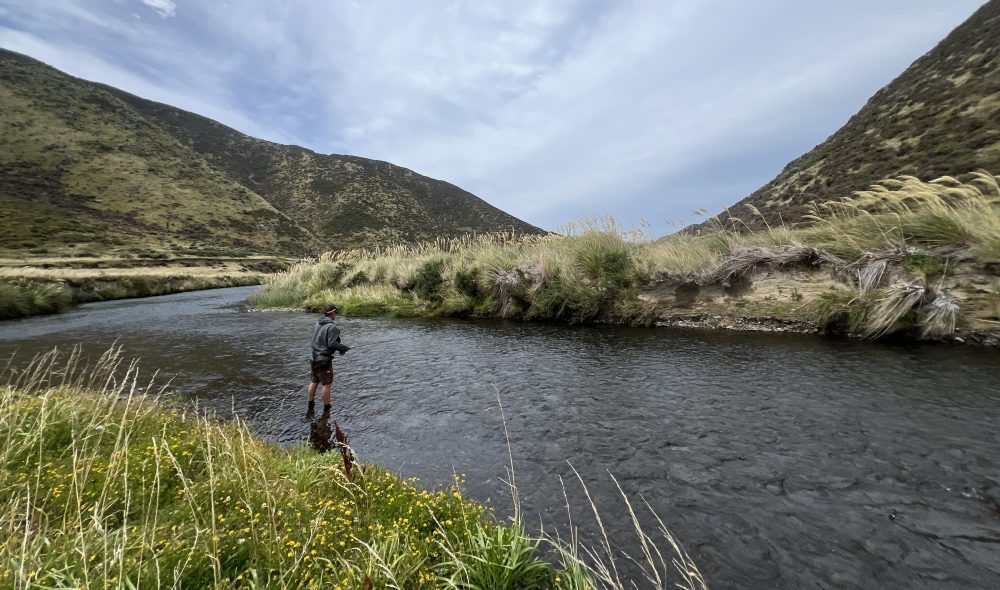
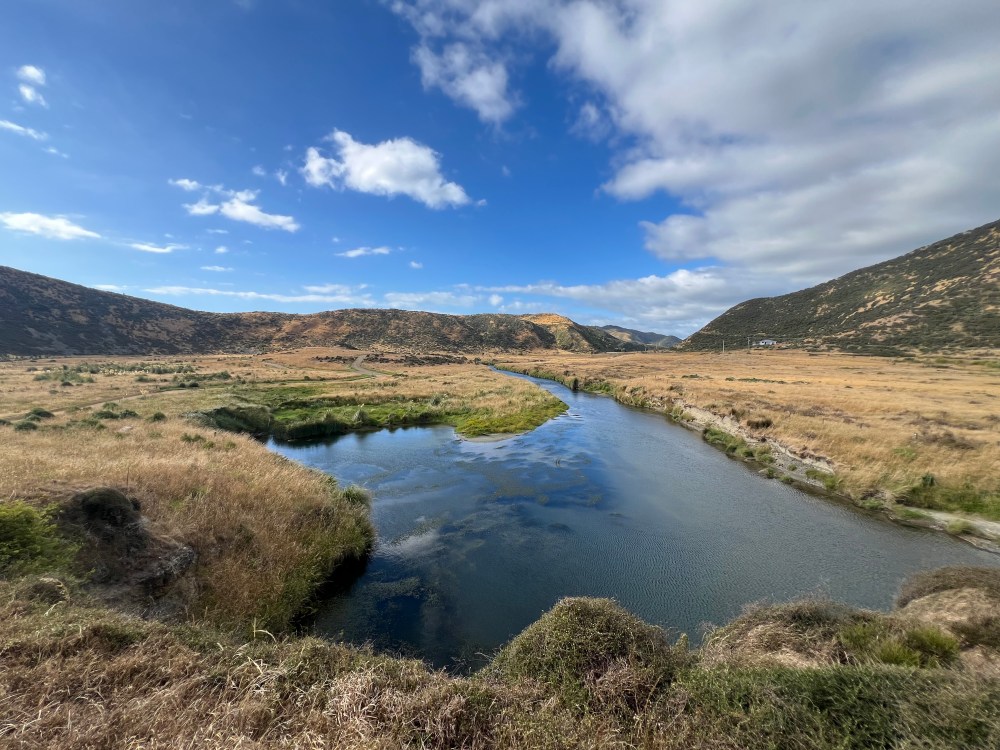
“Oh, so this is the wind tunnel the Black Foils use”, Teo noted dryly. It summed the situation up perfectly as we walked alongside the Wainuiomata River with rods in hand. Indeed, this waterway valley is renowned for its ability to funnel winds from both the north and south. But this was our only available fishing day, and we were determined to make the most of it.
So, like Sail GP professionals, we continuously scanned upriver for the telltale scuffed surface indicating the bigger gusts. Unlike the sailors, we were trying to judge the lulls between.
Did I mention it was windy? Maniacal laughter rang out as I ducked the wind-adjusted track of a fast-moving fly, bringing it a little close for comfort.
As we battled the conditions, strategies became clear; borne of necessity. Leaders and tippet were shortened with each wind-knot and tangle, and left that way. Usually, the local browns will spook at the slightest disturbance of the surface film, compelling fishers to employ long leaders and the lightest tippet. Today’s breeze-brushed water surface permitted wayward casts and more line on the water.
Allowances for the wind had to be made, like a goal-kicker curling a ball through the posts. Casting more than 30 degrees upstream was next to impossible, but casting across the wind (and water) was relatively successful. We kept repeating the mantra that we only needed one cast in the right place. It just often took several tries for that one cast!
We weren’t spotting trout rising, but the sound of cicadas was rich, and red damselflies danced across the river. Dry flies were the plan for the day, with a nymph morsel suspended underneath. The first trout rose to a Parachute Mrs X (PMX) Caddis; a fly that does a good job of impersonating a whole bunch of terrestrial insects.
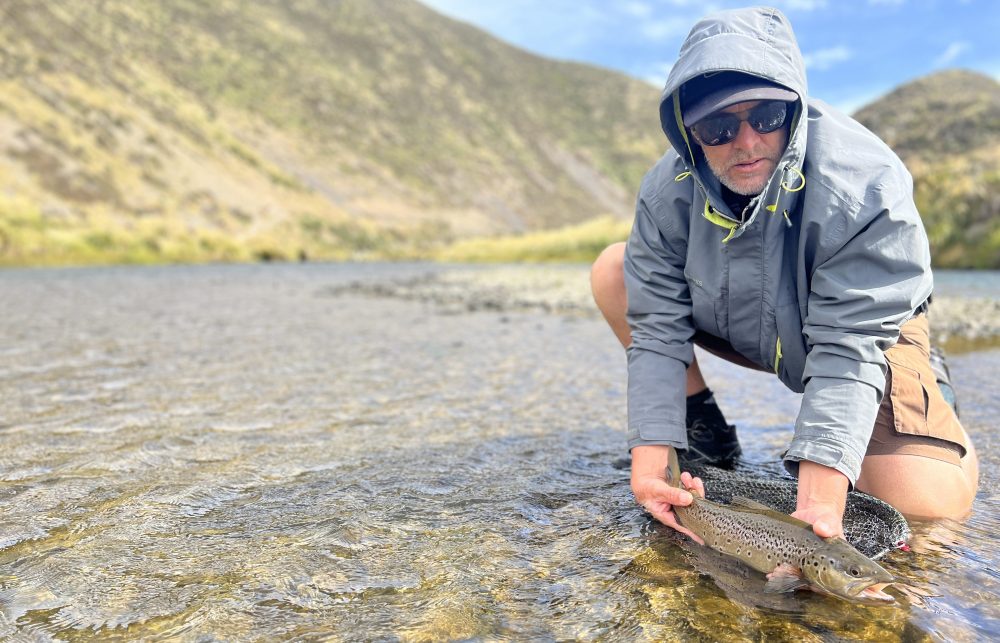
Both of us had trout unhurriedly cruise past our legs before taking flight, such was the camouflaging effect of the wind-ruffled surface. There were certainly fish around, and soon Teo had one on the line– his first on a dry! We were both ‘on the board’ and all the happier for it as we moved upriver.
Our practice downstream paid off as Teo landed one with a nymph, then we spotted a larger fish feeding against a bank. Several wayward casts were made before a gust helped the fly drop an inch from the bank and 3 metres upstream from the fish – perfect! Sure enough, it was the one cast needed, and a finned resident was landed shortly after. Unfortunately, my phone (and camera) lost its final charge before photographic evidence was attained.
We saw no one else fishing, possibly put off by a wind several orders higher that the forecast. But we now understood that these conditions played a big role in an entertaining session with the net in regular action.
What is the lesson here? Embrace the wind! Breezy days are a battle physically and mentally, but they can reward those who lean in to the conditions.
On lakes too, some fishers will deliberately wait for a windy day, with food sources blown into shore – followed by hungry trout. We learned first-hand on a day at Lake Sheppard.
 Riversmiths NZ