
Paella is a great social dish. While it is cooking a fair amount of discussion is often had
discussing the pronunciation of the word itself!
The key to decent paella is to use the correct rice, known as Bomba. A kilo bag of rice will
serve 10. The rice is available at shops specialising in Mediterranean food ingredients, on-line, or is increasingly found in supermarkets. Arborio (risotto rice) can be used.
Paella is the name of the pan itself, as well as the meal and while it is useful to have a paella pan, a wide frying pan will suffice at home. The idea is to keep the rice layer fairly shallow and heated evenly.
The cooking instructions are a little ‘long-winded’ but it does require good tips to make it
well.
Ingredients (to serve 6)
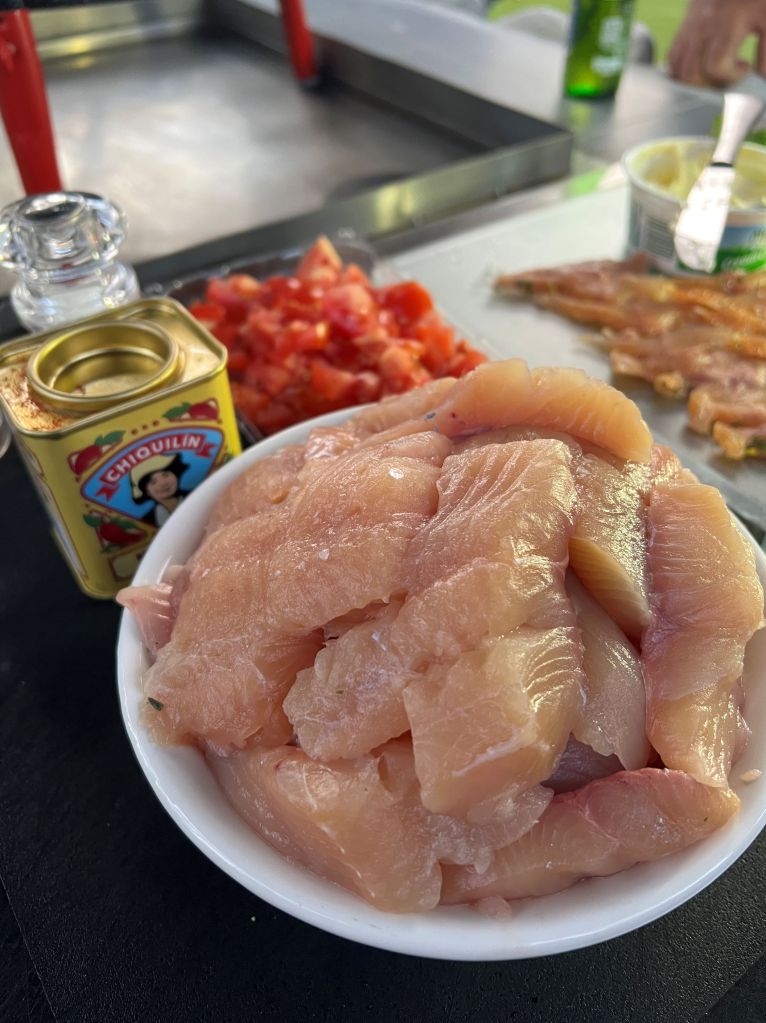
2 medium sized boneless, skinned trout fillets, cut into pieces
- 600g Paella rice
- ¼ cup olive oil plus a little extra
- 2 bacon rashers cut into thin strips
- 1 medium sized diced onion
- 6 clove diced garlic
- 2 stalks diced celery
- 1 red capsicum diced
- 4 large tomatoes grated, or ½ a can of diced tomatoes
- 1 litre fish stock and 2 teaspoons vegetable stock powder – hot *see note
- A pinch of saffron in ½ a cup of hot water
- 2 teaspoons salt
- A good grind of pepper
- Finely chopped herbs (like thyme and parsley) and lemon wedges to serve
To Cook
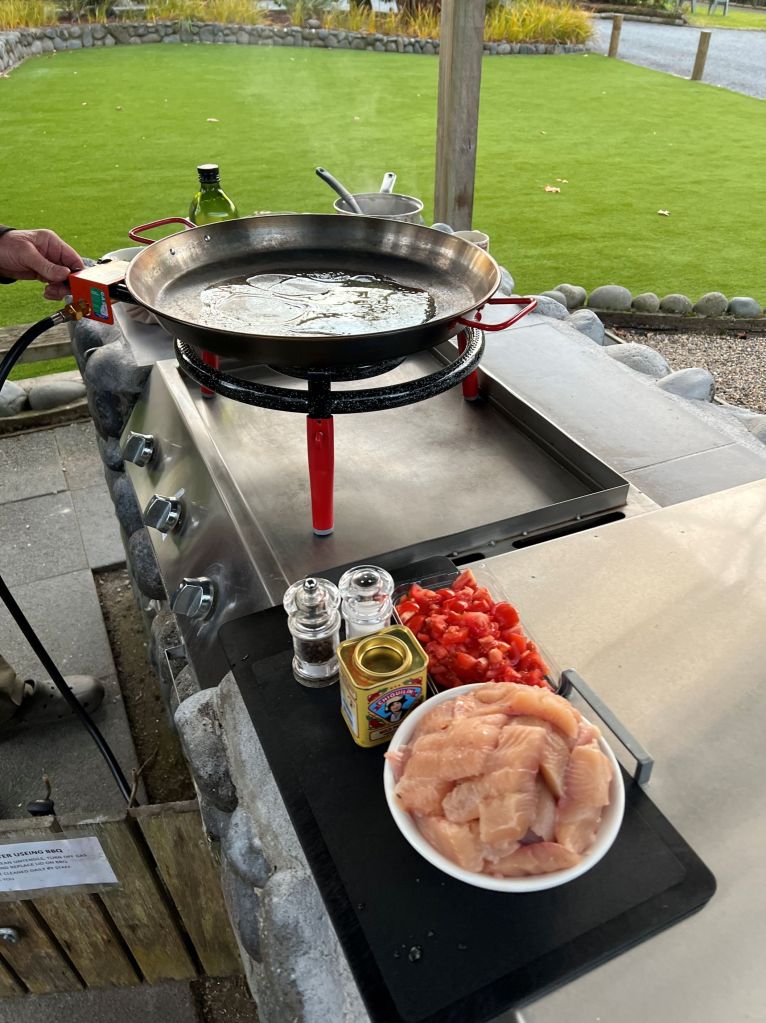
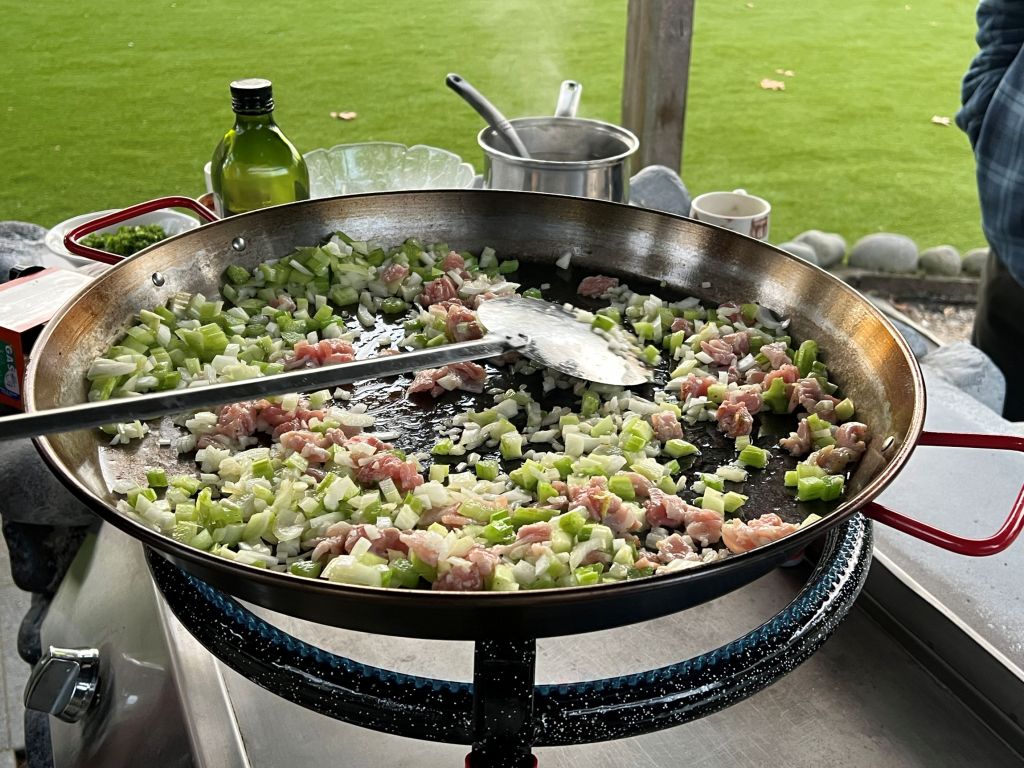
Heat your pan, add olive oil. Fry the bacon, then add onion, garlic, celery and capsicum.
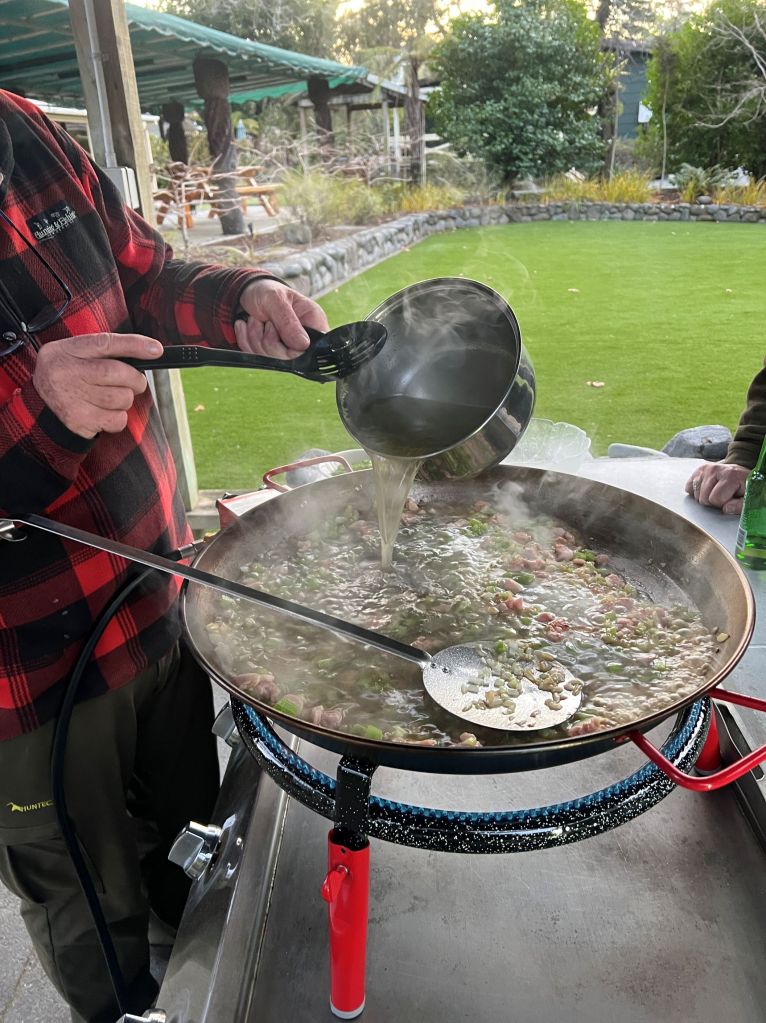
Fry over an even heat until just starting to colour, then add stock, tomatoes and saffron water.
Season with salt and pepper; if you are using a purchased stock halve the salt.
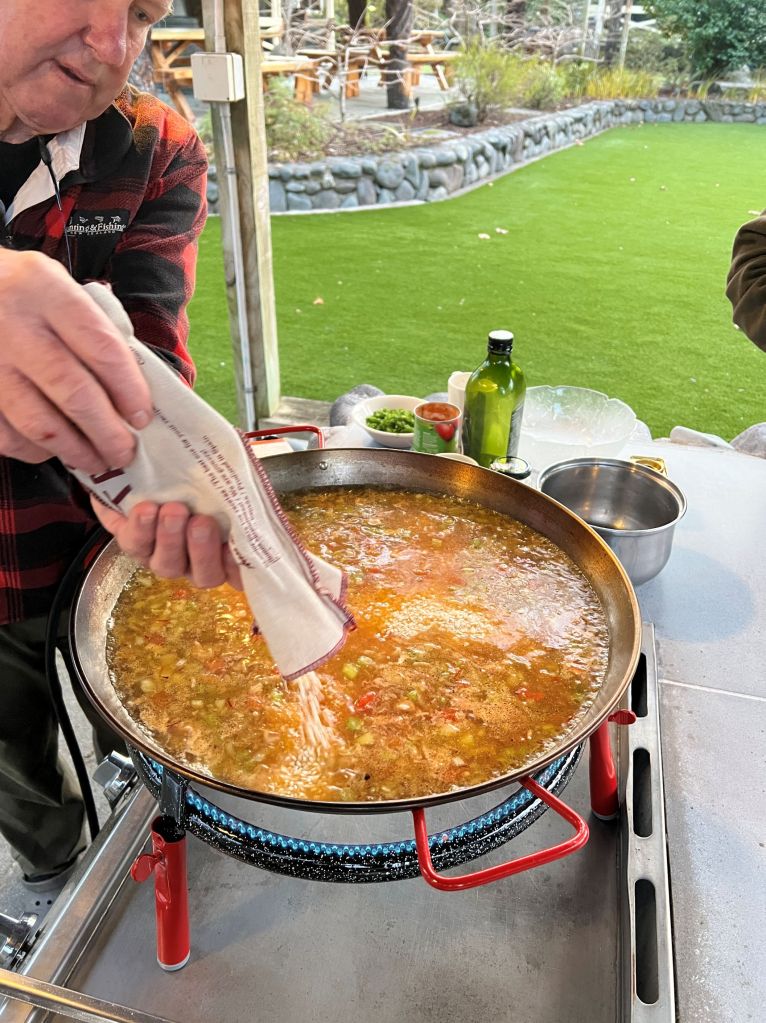
Bring to a boil then add rice, spread evenly and control your heat to a steady simmer. try not to stir too much, rather move the cooking rice gently with a spatula if required, or shaking the pan from side to side. (Traditional paella is not stirred.)
Simmer until the rice starts to absorb the liquid, around 20 minutes. Check for seasoning at
this stage and test that the rice is almost cooked. If it is drying out too much before it is cooked,
add a little water. You are looking for a finish that has absorbed all of the liquids.
At this stage you need to use your judgment as much as strictly following a recipe.
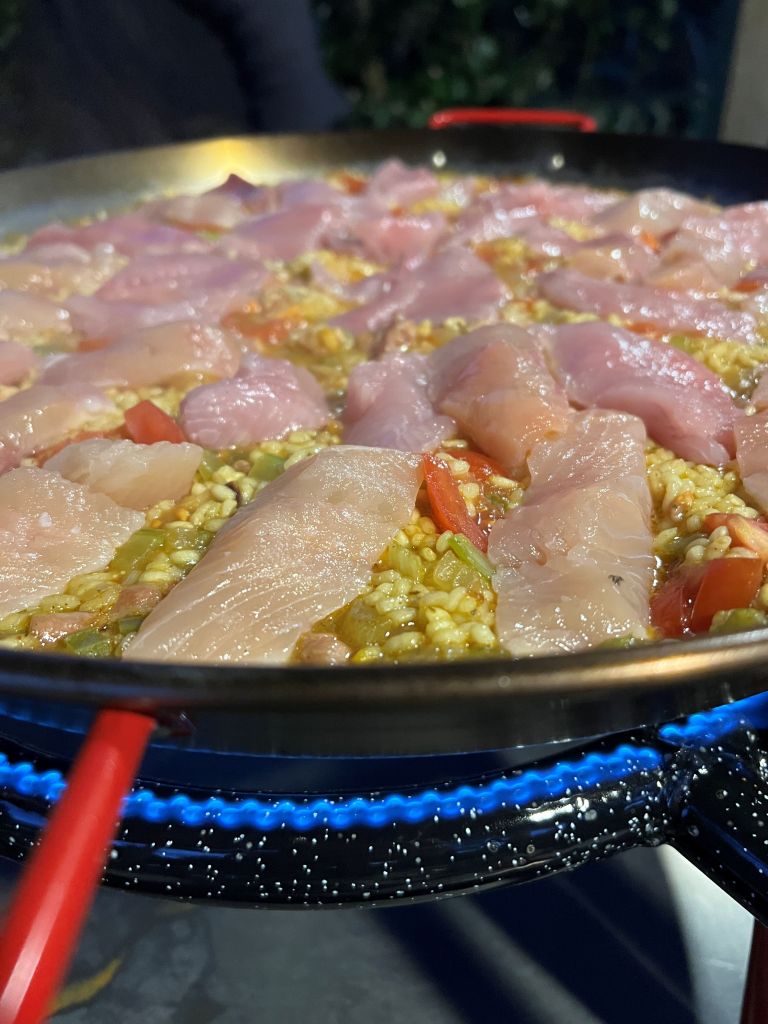
When you are happy the rice is ‘not too far off’, season the trout pieces and place them on
top, sprinkle with a little extra olive oil. Turn the trout pieces over after a few minutes; the
trout will not need too much cooking.
Ideally the rice on the bottom of the pan will be taking on a little brownness; this is called ‘the Socarrat’ and greatly adds to the flavour and enjoyment of a Paella.
Finish with freshly chopped herbs, a drizzle of olive oil, and a squeeze of fresh lemon juice as desired.
The best way to serve is to place the whole pan onto your table and all help themselves. In fact, true paella style is to eat it straight from the pan! Serve with a simple salad and fresh bread.
*Making your own stock
If you have filleted your own trout you can make a quick stock. Place the head and carcass into a large saucepan along with a leek or onion, add a couple of bay leaves, 2 litres cold water, bring to a boil, simmer 20 minutes, strain. Alternatively use bought stock or extra vegetable stock booster.
The following photos may be a useful guide to the process. If paella becomes part of your regular cooking vocabulary, you may consider acquiring firstly a pan, then a paella gas burner, which provides even, controllable heat across the pan. It also makes a great breakfast pan to feed a crowd!



 Riversmiths NZ