
My first Wellington Flyfishers Club trip was set for mid-May. With the season ended for many rivers, and some favoured destinations unfishable due to recent storms, the Manawatū River turned out to be a superb choice.
Our accommodation was a simple A-frame with history on its side – donated by the local Rotary club in 1969. It sat amongst Dannevirke Holiday Park, which is immaculately kept, and boasts hot showers with fire-hose pressure. This is a great place to stay, and affordable too. Snoring was kept to acceptable levels, even in the wake of après fishing drinks, leaving fishers rearing to, well, catch fish.
The Manawatū river originates in the Ruahine Ranges and meanders through Tararua country before driving through the gorge to Palmerston North and joining the sea at Foxton. While the upper reaches are closed for winter spawning, the middle and lower stretches are open year-round. We explored the common access points south of Danneverke, and as the fishing was so good, we had no reason to explore further!
Down on the river, gold bead head nymphs were advised, but unweighted flies seemed to be favoured early, with the beads doing a job to get deep, and the fish eating simple black and peacock flies. They proved a good match for an abundance of snails, and perhaps the water boatman that scattered as my boots hit the water. Caddis patterns were also effective, with less flashy morsels seemingly more likely to attract attention from the pickier brown trout population – their relative rarity making landing one a desirable proposition.
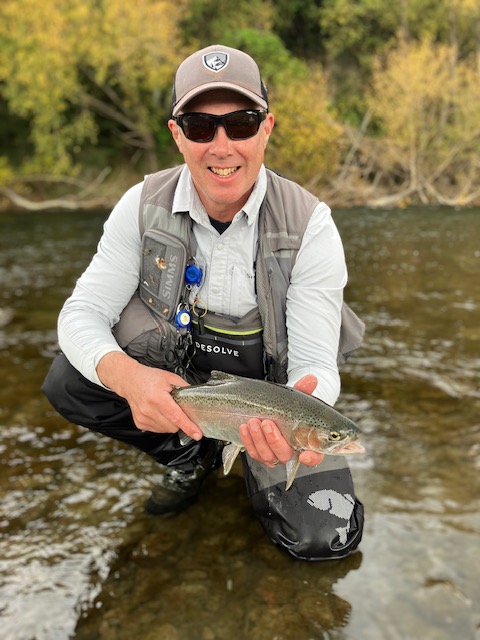
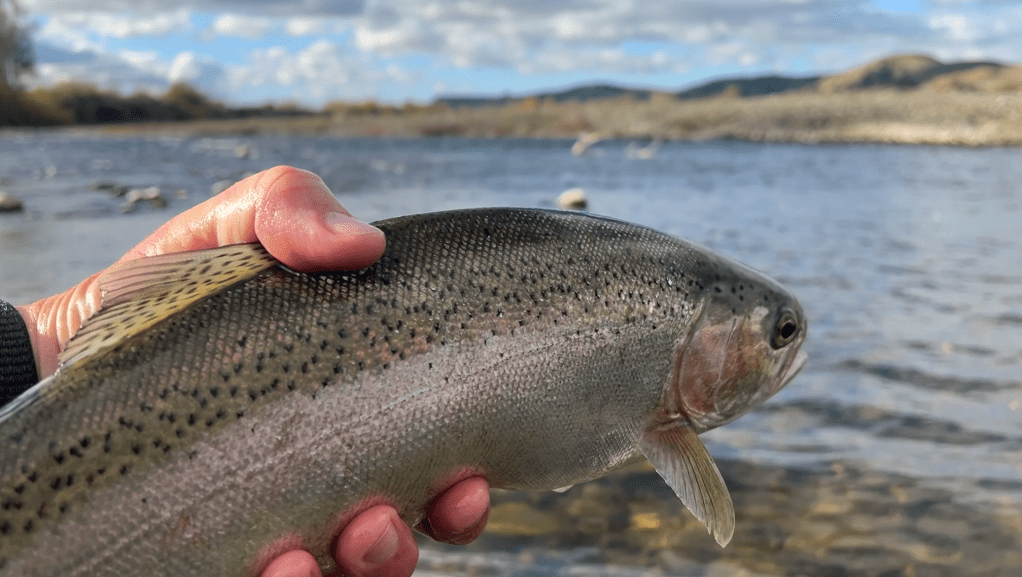
Most fish caught were beautifully silver, with unmistakably rainbow flanks. We found plenty of rainbows in the 3-4lb range that fought like much bigger fish. With a low clear river, I started with a short 5lb 5x point fly tippet, but soon upgraded after losing a couple of point flies to these well-conditioned silver bullets.
The river was running at normal flows, making wading easy. We used Fish & Game access points which provided excellent water with a surprising lack of fishing pressure. In fact the only other anglers I met were our Hutt Valley club neighbours. There are many good fishing rivers in the region, and perhaps this one is underrated and overlooked.
Without travelling far the variety of water is exceptional, and wet-lining, indicator nymphing and tightline nymphing were all employed with success. Whatever set up you carried, you could pick a suitable spot and find bars of scaly silver and gold. One of the team had tremendous success with a small olive woolly bugger, as one example.
The common factor was fishing the faster, more oxygenated water. Even the browns seemed to employ this tactic, though they sat more sensibly on the whitewater margins while the rainbows were content hunting nymphs in the stronger currents. 3.5mm weighted nymphs proved a good option to get down, with frequent mends and “high sticking” to mitigate drag. Other spots allowed drifts of 30 metres or more in medium, even currents.
In either case, fish were out of sight, so blind fishing was the norm, looking for feedlines and seams most likely to provide a lie where the food energy intake most exceeded the effort required to hold there.
After two days of fishing spread over three, four remaining fishers from the original five compared notes. 99 fish to the net!
Wow. A mighty river for sure.



 Riversmiths NZ